
Which Of The Following Types Of Risk Is Insurable
Which Of The Following Types Of Risk Is Insurable - Due to chance, measurable and definite, predictability, noncatastrophic, random selection, and large loss exposure. How can an insurance company minimize exposure to loss? Understanding how risk influences insurance decisions helps policyholders make informed choices. Other personal risks include unemployment, bankruptcy, identity theft, accidents, etc. Every insurance policy is built around the concept of risk—the likelihood that an insured event will occur and result in a financial loss. Explore the elements of insurable risk:
(it shifts liability for loss from one party to another) larger groups provide better loss predictions. There are three major insurable types of pure risk: This encompasses risks related to physical assets, such as property damage. Due to chance, measurable and definite, predictability, noncatastrophic, random selection, and large loss exposure. This involves risks arising from internal processes, people, and systems, and while some aspects may be insurable, the entire operational risk typically isn't.

7 Elements of Insurable Risk
There are three major insurable types of pure risk: It can also mean a risk to identity or financial investments. Insurable risks are those with foreseeable losses or costs, where the probability of occurrence can be estimated. > risk avoidance > risk transfer > hazard reduction > loss management Which of these statements regarding insurance is false?
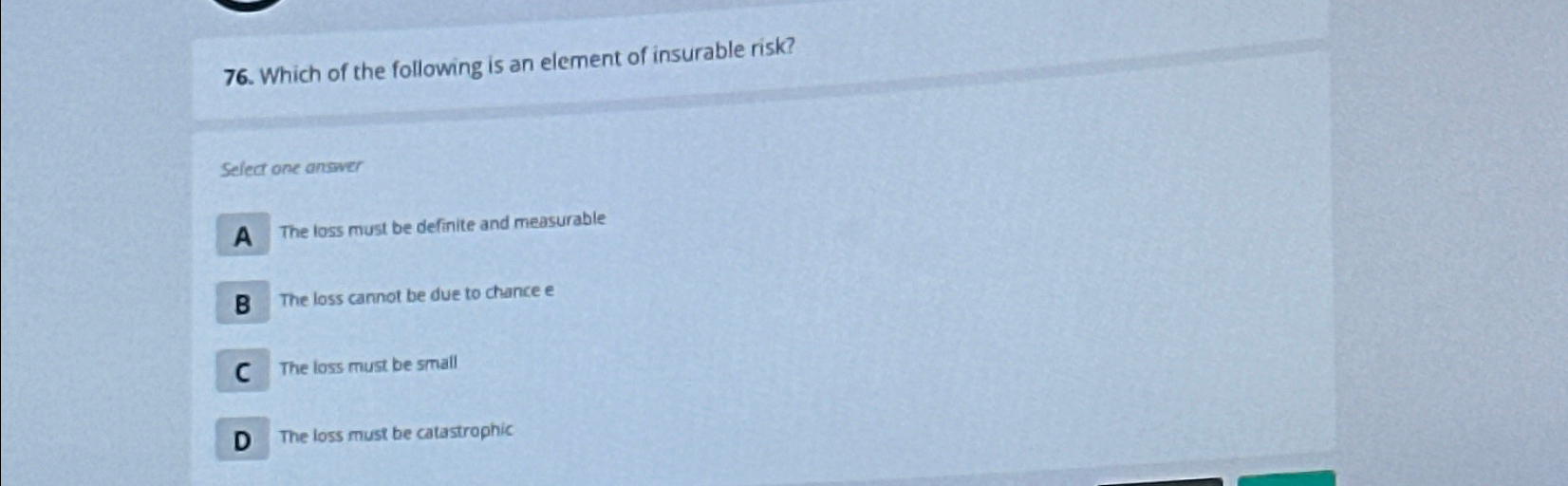
Solved Which of the following is an element of insurable
Every insurance policy is built around the concept of risk—the likelihood that an insured event will occur and result in a financial loss. Due to chance, measurable and definite, predictability, noncatastrophic, random selection, and large loss exposure. Which of the following types of risk is insurable? Examples include fire damage, vehicle accidents, and medical expenses. Which of the following types.

How To Mitigate 8 Types Of Insurable Risks Summit Planners
(it shifts liability for loss from one party to another) larger groups provide better loss predictions. Every insurance policy is built around the concept of risk—the likelihood that an insured event will occur and result in a financial loss. This encompasses risks related to physical assets, such as property damage. An insurer has a contractual agreement which transfers a portion.

Solved Which of the following risks are insurable? For risks
The types of risk that are insurable include both pure and speculative risks. > risk avoidance > risk transfer > hazard reduction > loss management What type of contractual arrangement is this? Which of these statements regarding insurance is false? In contrast, speculative risks involve possibilities of gain and loss, making them uninsurable.

Elements of Insurable Risk & Insurability (with Examples) Embroker
(it shifts liability for loss from one party to another) larger groups provide better loss predictions. There are three major insurable types of pure risk: What type of contractual arrangement is this? It can also mean a risk to identity or financial investments. > risk avoidance > risk transfer > hazard reduction > loss management
Which Of The Following Types Of Risk Is Insurable - Which of the following types of risk is insurable? The higher the exposure, the more likely the event can be predicted. Every insurance policy is built around the concept of risk—the likelihood that an insured event will occur and result in a financial loss. An insurable risk is a type of risk that can be covered by an insurance policy. (it shifts liability for loss from one party to another) larger groups provide better loss predictions. In contrast, speculative risks involve possibilities of gain and loss, making them uninsurable.
An insurable risk is a type of risk that can be covered by an insurance policy. The types of risk that are insurable include both pure and speculative risks. An insurer has a contractual agreement which transfers a portion of its risk exposure to another insurer. Insurable risks are those with foreseeable losses or costs, where the probability of occurrence can be estimated. In contrast, speculative risks involve possibilities of gain and loss, making them uninsurable.
Insurers Assess This Risk To Determine Coverage Eligibility, Pricing, And Conditions.
This encompasses risks related to physical assets, such as property damage. The types of risk that are insurable include both pure and speculative risks. Due to chance, measurable and definite, predictability, noncatastrophic, random selection, and large loss exposure. Every insurance policy is built around the concept of risk—the likelihood that an insured event will occur and result in a financial loss.
Which Of The Following Types Of Risk Is Insurable?
An insurable risk is a type of risk that can be covered by an insurance policy. (it shifts liability for loss from one party to another) larger groups provide better loss predictions. It can also mean a risk to identity or financial investments. There are three major insurable types of pure risk:
Understanding How Risk Influences Insurance Decisions Helps Policyholders Make Informed Choices.
The insurable type of risk is pure risk, which involves potential loss or no loss and is adequately assessable by insurance companies. Which of these statements regarding insurance is false? Examples include fire damage, vehicle accidents, and medical expenses. In contrast, speculative risks involve possibilities of gain and loss, making them uninsurable.
An Insurer Has A Contractual Agreement Which Transfers A Portion Of Its Risk Exposure To Another Insurer.
Explore the elements of insurable risk: Which of the following types of risk is insurable? What type of contractual arrangement is this? Other personal risks include unemployment, bankruptcy, identity theft, accidents, etc.